
Cart actions
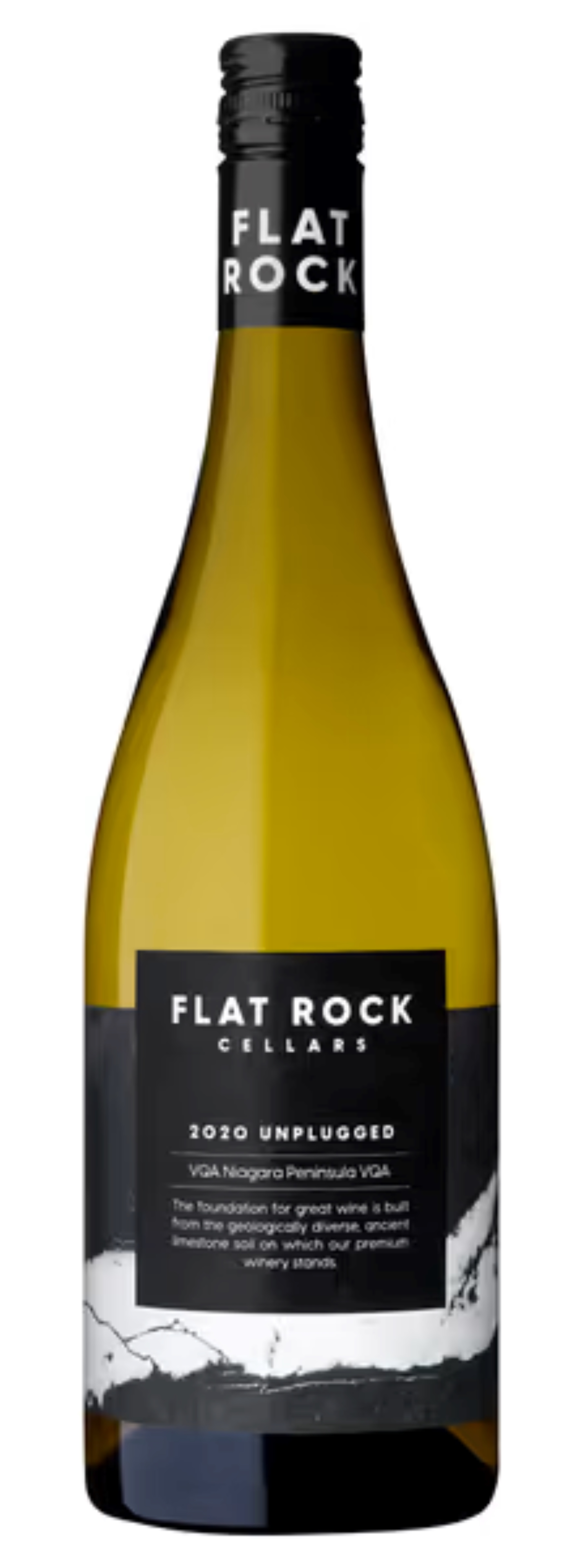
Flat Rock Unplugged Chardonnay 2023
Pricing
SALE
S$ 3,600 S$3,240 (excl. tax)
Product description
A true expression of place, the 2023 "Unplugged" Chardonnay was picked early to preserve primary fruit character and balanced acidity. It was fermented and aged in stainless steel to showcase the influence of terroir on this grape without the cover of oak. Additional layers of complexity and texture are added using special techniques and subtle lees contact.This maintains freshness and is a great way to show the versatility of Chardonnay in Niagara.
Product details sections
Details
- Country
- Canada
- Region
- Ontario
- Appellation
- Niagara Peninsula
- Winery
- Flat Rock Cellars
- Vintage(s)
- 2023
- Color
- White Wine
- Varietal(s)
- Chardonnay
Data
- Closure
- Screw Cap
- Volume
- 750ml
- Alcohol
- 13%
- Product Code
- A011W00323
- UPC
- 881860300475
Owning & Enjoying
- Tasting notes
-
Flat Rock is one of Ontario's most trusted Chardonnay producers, and this unoaked version is among the most consistent wines in the region. It's ripe and quite plush, yet crisp, bright and refreshing, with impressively presented orchard fruit and a noted purity of mineral expression. Precise and perfectly cool-climate.
- Pairing
-
Unoaked Chardonnay is a natural with salmon and seafood dishes, particularly where butter is involved. Pair it with grilled chicken or grilled stuffed mushrooms.
Production
- Terroir
-
VQA Niagara Peninsula
Winery
- Winery Description
Founded in 1999 on a spectacular piece of the Niagara Escarpment known as the Jordan Bench – Flat Rock Cellars is perched on a gently rolling slope studded with vines. The winery building is a quirky, glass-encased, hexagonal masterpiece that‘s distinctive and fun. From here you can enjoy their crowning glory, the breathtaking views of the Peninsula and across Lake Ontario to Toronto.
Flat Rock's incorporated environmentally responsible technologies include:
-
Geo-thermal systems for heating and cooling.
-
Environmentally sensitive waste management system.
-
The use of ozone to clean, reducing the use of chemicals in the winery.
-
Low impact viticulture practices to manage vineyard.
-
Gravity flow reduces the energy required to make wine.
-
Landscaping that complements natural surroundings.
-
Underground barrel cellars offering natural temperature and humidity control.
-
Light-weight glass options minimizes carbon footprint.
Flat Rock's Estate Vineyard
Only in finding the perfect piece of land on the Twenty Mile Bench were they able to make the Flat Rock dream a reality. The estate combines perfect growing and soil conditions (or terroir) with natural beauty and ideal topography. In fact, the slope is reminiscent of the great vineyards in Burgundy.
Flat Rock Cellars’ vineyards are comprised of 80 acres of Chardonnay, Pinot Noir, Riesling, with a small patch of Gewurztraminer for good measure. They chose these varieties as an integral part of their overall winemaking strategy, because they are best suited to cooler climate of the Niagara Peninsula and more specifically the Twenty Mile Bench.
One of the fundamental principles in quality winemaking is the ability to control and ensure balanced yields in the vineyard. At Flat Rock Cellars all of their grapes are cropped at levels that ensure fruit quality and intensity of varietal character.
Winemaking
To make great wine, Flat Rock's strategy is to combine sustainable, quality-driven vineyard management practices, high quality winemaking equipment, proven traditional vinification techniques and an uncompromising commitment to quality and innovation.
Each step of their winemaking process was carefully developed to ensure that the wine has every opportunity to achieve its maximum potential. Let’s use Pinot Noir as an example. Utilizing their 5–level gravity flow design, the wine can be crafted using the gentlest of processes from picking of the grapes through to the filling of the barrels.
Here’s what happens: The handpicked grapes arrive at their “harvest doors” at the top level of the winery in small 14 kg baskets. The baskets are tipped by hand onto a slowly shaking sorting table, where trained harvest crew can visually inspect and remove any unwanted bunches. Only those bunches deemed worthy carry on to the highly effective, yet gentle de-stemmer/crusher.
From here the grapes descend into 4.5 tonne, temperature controlled fermenters, specially designed to allow for manual manipulation of the fermentation cap. This involves using elbow grease (harvest crew power) and hand tools such as the “outil de pigeage” (a type of stainless steel plunger) to gently push the floating grape skins back down into the fermenting wine. This is done every 6 hours to facilitate extraction of colour and tannins from the skins into the wine.
When the time is right the contents of the fermenter will be drained by gravity into the press below, where a carefully orchestrated series of gentle squeezes will liberate the wine from solids. A brief stay in a tank at the lower level will allow the wine to settle more suspended solids before it is racked (again by gravity) to the French oak barrels waiting in the lowest recesses of the winery. This is where the aging process begins. The final step is the blending of the individual barrels to create a harmonious bottle of wine.
With all this attention to detail, by the time the wine is ready to drink, you can count on a great bottle of wine!
-